Let me guess. You decided to try container gardening, you bought a tomato plant, put it in a pot on your balcony, and spent the summer watching it produce exactly three tomatoes and a lot of yellow leaves. You concluded you have a black thumb. You gave up.
If that's you, I have good news: the problem wasn't you. The problem was the tomato. Tomatoes are actually one of the harder things to grow in containers — they're thirsty, hungry, disease-prone, and they want deep soil that most pots don't provide. The fact that everyone starts with them is a strange cultural phenomenon that does a disservice to beginning container gardeners everywhere.
Let's fix that. Here's what actually works in containers, why it works, and how to set yourself up for success from the start.
The Container Gardening Mindset Shift
Container gardening is fundamentally different from in-ground gardening, and understanding the differences is what separates success from frustration. In the ground, soil acts as a buffer — it holds moisture, releases nutrients slowly, and forgives your mistakes. In a container, there's no buffer. Every watering, every feeding, every temperature swing hits your plant directly.
This sounds like a disadvantage, but it's actually a superpower. You have complete control. You can move a plant to follow the sun. You can adjust the soil mix precisely. You can bring tender plants indoors when frost threatens. The container gardener is a conductor, not a spectator.
Rule One: Bigger Pots Than You Think
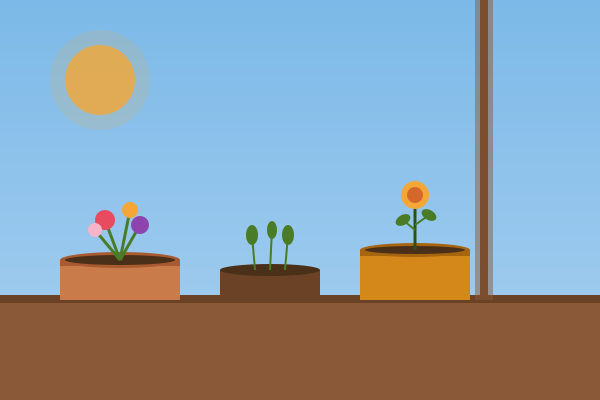
The number one mistake in container gardening is using pots that are too small. Small pots dry out in hours, heat up to root-damaging temperatures, and don't give plants room to develop the root systems they need. A 12-inch pot is a minimum for most vegetables. A 16-inch pot is better. Five-gallon buckets (with drainage holes drilled) are excellent and cheap.
The one-finger test: push your finger into the soil up to the second knuckle. If it's dry at that depth, water. If it's moist, wait. This is more reliable than any moisture meter and costs nothing.
Rule Two: The Right Soil
Never use garden soil in containers. It compacts, doesn't drain, and will turn your pot into a brick. Use a quality potting mix — one that contains peat or coco coir (for moisture retention), perlite or vermiculite (for drainage), and compost (for nutrients). You can make your own by mixing equal parts coir, compost, and perlite.
Rule Three: Drainage Is Non-Negotiable
Every container must have drainage holes. If you fall in love with a decorative pot without holes, either drill holes in it or plant in a plastic nursery pot that fits inside. Sitting water kills more container plants than drought ever does.
What Actually Thrives in Containers
Herbs — The Gateway Drug
Herbs are the perfect starting point for container gardening. They're compact, they don't need rich soil, and many of them actually prefer the drier conditions that pots provide. Start with:
- Basil — One plant per 8-inch pot. Pinch the tops to keep it bushy.
- Mint — Always in its own pot. Mint is invasive and will take over anything it shares soil with.
- Rosemary and thyme — Mediterranean herbs that love dry, sunny conditions. Perfect for terracotta.
- Chives — Perennial, so they'll come back year after year in the same pot.
- Parsley — Biennial, but grow it as an annual. Very forgiving.
Leafy Greens — The Productive Workhorses
Lettuce, spinach, Swiss chard, and kale are exceptional container plants. They have shallow roots, they grow fast, and you can harvest them leaf by leaf for weeks. A single 14-inch pot of cut-and-come-again lettuce will give you salads for a month. They also tolerate partial shade, making them ideal for balconies that don't get full sun.
Peppers — Better Than Tomatoes
Here's the secret that container gardening veterans know: peppers are easier than tomatoes in pots. They're smaller, they're less demanding, and they produce prolifically. A single jalapeño or bell pepper plant in a 5-gallon pot will give you a summer's worth of peppers. They love heat, they don't mind drying out slightly between waterings, and they're rarely bothered by disease.
I switched from tomatoes to peppers in my container garden five years ago and never looked back. More food, less stress, zero blossom-end rot.
Root Vegetables — With a Caveat
Radishes and carrots can grow in containers, but they need deep pots (at least 12 inches for carrots) and loose, stone-free soil. Radishes are actually fantastic in containers — they're ready in 25–30 days and you can succession-sow them every two weeks for a continuous supply. Stick to round varieties for carrots; they're more forgiving than long ones.
Strawberries — The Sweet Surprise
Strawberries are brilliant in containers. They have shallow roots, they spread by runners (which you can root in adjacent pots), and they fruit happily in hanging baskets or strawberry towers. Plant them in early spring for a June harvest. Everbearing varieties will give you a smaller crop from June through September.
Flowers — Beauty and Function
Container flower gardens are just as rewarding as edible ones. Compact varieties of zinnias, marigolds, and calibrachoa provide months of color. For a "thriller, filler, spiller" combination — a tall centre plant, a mounding mid-layer, and a trailing edge — try a purple fountain grass centre, surrounded by white bidens, with trailing lobelia cascading over the edge.
The Watering Question
Container plants dry out faster than in-ground plants — sometimes needing water daily in the heat of summer. This is the biggest adjustment for new container gardeners. Here's how to manage it:
- Mulch the surface. A layer of straw, bark, or even pebbles dramatically reduces evaporation.
- Group pots together. This creates a microclimate with higher humidity and less wind exposure.
- Use self-watering containers. These have a reservoir at the bottom that keeps soil moist for days. Worth every penny if you travel or tend to forget.
- Water in the morning. Evening watering can lead to fungal problems; midday watering loses too much to evaporation.
For a deep dive into watering strategy, check our article on watering deeply vs. watering often — the principles apply to containers with some important modifications.
Feeding: The Missing Link
Container plants can't send roots out searching for nutrients. What you give them is what they get, and frequent watering flushes nutrients out the drainage holes. So container plants need regular feeding — more than in-ground plants.
Use a liquid fertilizer every two weeks (weekly for heavy feeders like peppers and tomatoes, if you insist on growing them). A balanced organic liquid feed — fish emulsion, kelp extract, or a compost tea — works well. Slow-release granules mixed into the soil at planting time provide a baseline, but they won't carry the whole season.
Overwintering Container Plants
Container plants are more vulnerable to winter cold than in-ground plants because their roots aren't insulated by the earth. A plant that's hardy to Zone 5 in the ground might die in Zone 7 in a pot. To overwinter container perennials:
- Move pots to a sheltered spot against a house wall
- Wrap pots in bubble wrap or burlap for insulation
- Move tender plants indoors to a cool, bright room
- Group pots together and mulch heavily around them
What About That Tomato?
If you really want to grow tomatoes in containers — and many gardeners do, successfully — here's how: Use the biggest container you can manage (at least 18 inches / five gallons). Use a determinate (bush) variety bred for containers, like 'Patio' or 'Tiny Tim.' Water consistently — never let it dry out completely. Feed weekly. And accept that you'll get fewer tomatoes than an in-ground gardener, but they'll be yours, grown on your balcony, and they'll taste like summer.
There's no shame in starting with herbs and greens and working your way up to tomatoes. There's also no shame in deciding tomatoes aren't your thing and growing peppers instead. The best container garden is the one that gives you joy — and a steady supply of something you actually want to eat.
Ready to set up your own container garden? See our guide to building raised beds if you have a bit more space, and explore plant guides for detailed growing information on everything mentioned here. Our seasonal calendar will tell you when to plant what.

We write practical, encouraging gardening guides for home gardeners. Every article is rooted in real experience — and a deep belief that everyone deserves a joyful outdoor space.